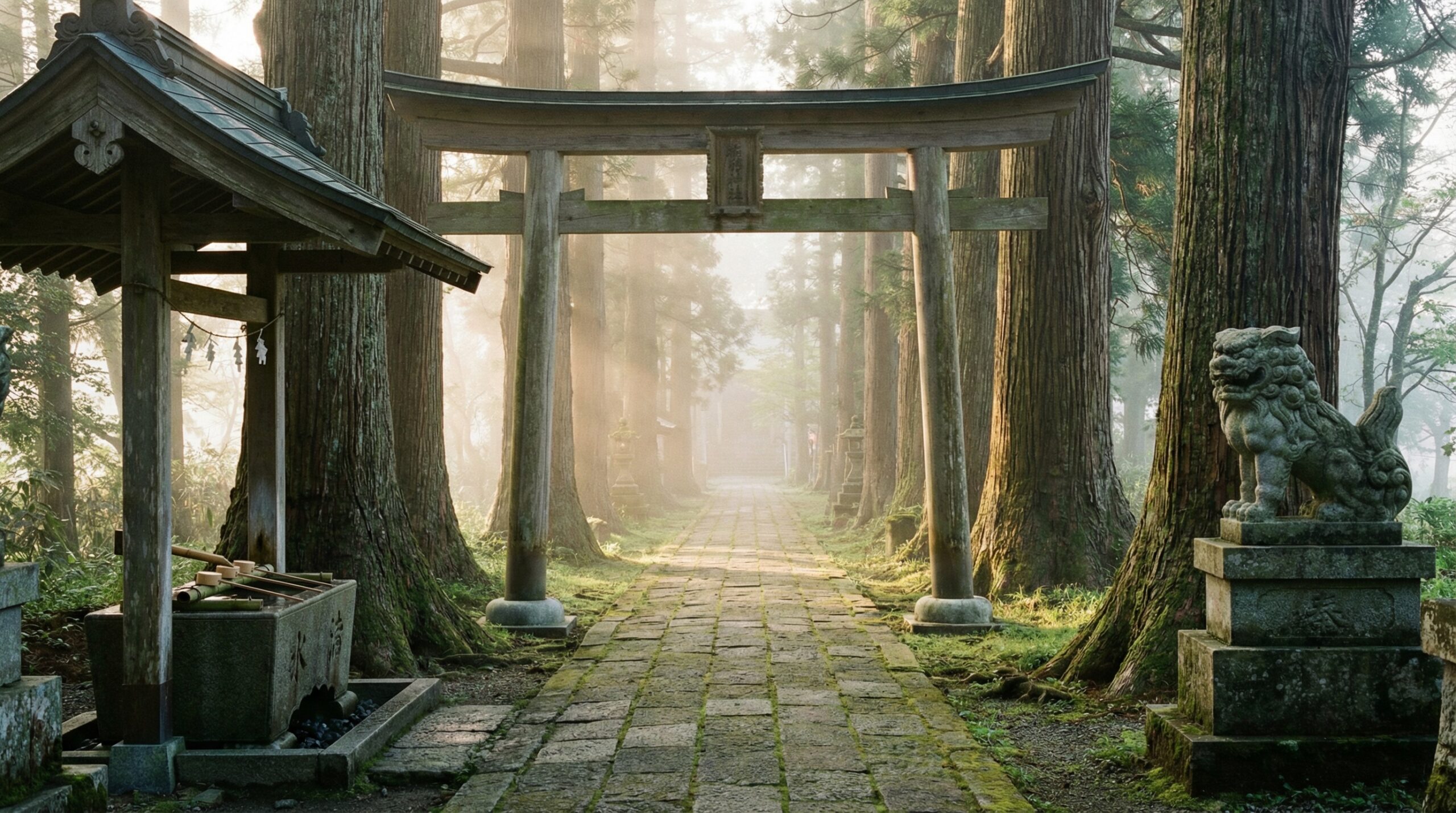
When you travel in Japan, you will often come across beautiful sacred places. Some have torii gates standing at the entrance. Others have large wooden gates, incense, and Buddhist statues.
If you are visiting Japan for the first time, it is very natural to wonder: Is this a shrine or a temple? What is the difference? Do I pray in the same way at both?
The good news is that the basic difference is actually quite simple. Once you understand it, Japan becomes easier to read. And more importantly, your trip becomes more meaningful.
In this guide, I will explain the difference between shrines and temples in a clear and beginner-friendly way, including how to tell them apart and how to behave respectfully when you visit.
Conclusion first: shrines are Shinto, temples are Buddhist
If you remember only one thing, remember this: shrines belong to Shinto, and temples belong to Buddhism.
Shinto is Japan’s native spiritual tradition, deeply connected to nature, place, and purity. Buddhism came to Japan from the Asian continent and became an important part of Japanese spiritual life, culture, and history.
Both shrines and temples are places of prayer and respect, but they come from different religious backgrounds. That is why they look different and why the customs you follow there are also different.
Shrines and temples may feel similar at first, but once you know the basics, you start seeing Japan with new eyes.
Shrines and temples at a glance
| Point | Shrine | Temple |
|---|---|---|
| Religion | Shinto | Buddhism |
| Main entrance marker | Torii gate | Sanmon gate |
| Prayer style | Usually bow twice, clap twice, bow once | Join your hands quietly in prayer |
| Common sights | Torii, purification fountain, komainu, sacred ropes | Buddha statues, incense, bells, guardian statues |
| Atmosphere | Purity, nature, openness | Silence, prayer, depth, history |
What is a shrine?
A shrine is a place connected to Shinto, Japan’s native belief tradition. Shinto is closely tied to nature, seasons, local communities, and a sense of reverence toward the sacred presence in the world.
The easiest sign of a shrine is the torii gate. This gate marks the boundary between the everyday world and sacred space.
That is why visitors often bow once before passing through the torii. It is also considered polite to avoid walking through the exact center, as the middle path is traditionally reserved for the deity.
Things you often see at shrines
- Torii gates
- Purification fountains (temizuya)
- Komainu guardian lion-dogs
- Sacred ropes (shimenawa)
- Ema prayer plaques and omikuji fortunes
What is a temple?
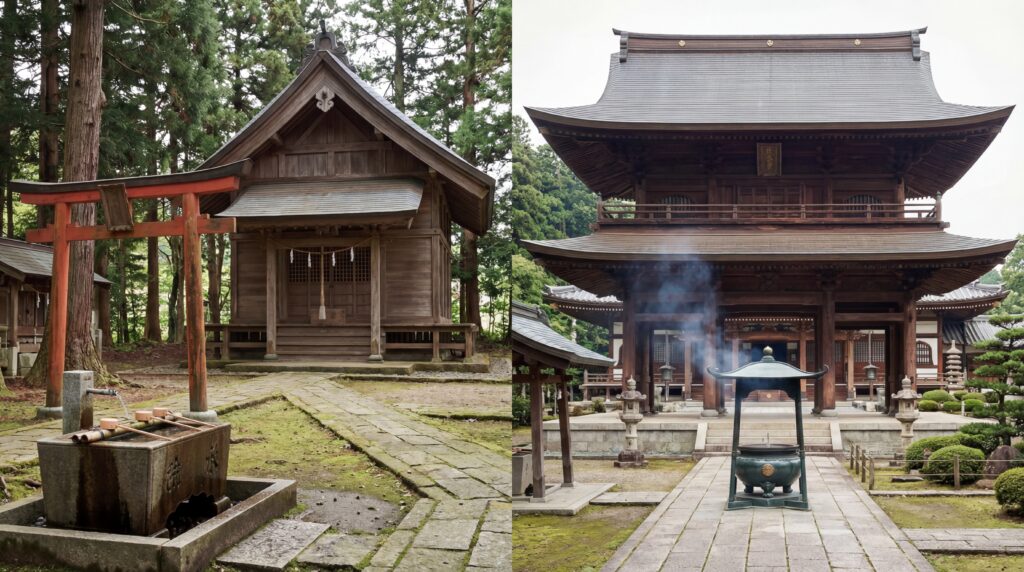
A temple is a Buddhist place of worship. Temples in Japan have long served as spaces for prayer, memorial services, spiritual training, and reflection.
A common visual clue is the sanmon gate, often a large and impressive entrance. At many temples, you may also see fierce guardian statues standing near the gate.
Temples often have incense burners, Buddhist statues, and a calmer, heavier sense of silence. Even when a temple is popular with tourists, it often still feels like a place that invites people to slow down.
Things you often see at temples
- Sanmon gates
- Buddhist statues
- Incense burners
- Bells or bell towers
- Guardian statues such as Nio
If you are not sure, look at the entrance first
If you are trying to tell whether a place is a shrine or a temple, the entrance is the easiest place to start.
A torii usually means shrine. A sanmon gate usually means temple.
After that, you can look for additional clues. Shrines often have komainu, sacred ropes, and a more open connection to nature. Temples often have Buddha images, incense, and a heavier architectural presence.
You do not need to learn everything at once. Even a few small clues can change the way you experience Japanese culture.
How to pray at a shrine
Shrines usually have a more clearly defined prayer style.
- Bow lightly before entering through the torii
- Avoid walking in the exact middle of the path
- Purify your hands and mouth at the temizuya if available
- Place a coin in the offering box
- Ring the bell if there is one
- Bow twice, clap twice, bow once
This style is often called the standard shrine etiquette. Some shrines may have small differences, but for first-time visitors, this is a very helpful basic pattern to remember.
How to pray at a temple
Temples are often less strict in terms of exact prayer form. The main idea is simple: be calm, respectful, and pray quietly.
- Bow lightly at the gate
- Use the purification fountain if there is one
- Place a coin in the offering box
- Offer incense if the temple provides it
- Join your hands and pray silently
The key difference is this: at temples, you do not clap.
Also, some temple buildings require you to remove your shoes before entering. Always check signs and follow the local instructions.
Simple manners that help you avoid mistakes
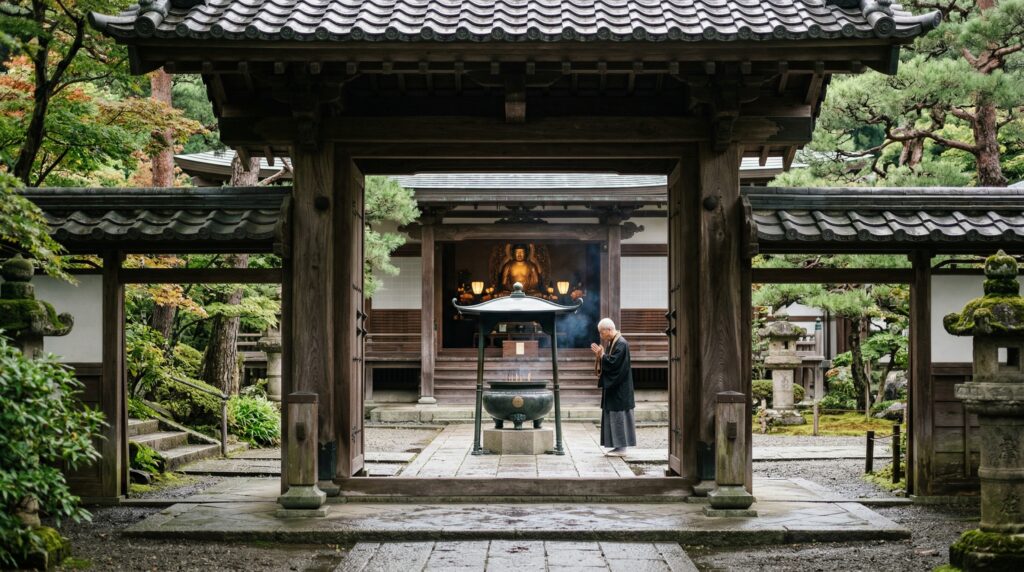
You do not need to be perfect. What matters most is showing respect.
- Do not speak loudly
- Do not disturb people who are praying
- Do not take photos where photography is prohibited
- Pay attention if a temple asks you to remove your shoes
- Taking off your hat can feel more respectful
Even if you do not remember every detail, a quiet and thoughtful attitude will usually be appreciated.
Why this difference matters when you travel
Learning the difference between shrines and temples changes the way you experience Japan.
When you see a torii, you begin to understand that you are entering sacred ground. When you stand before a temple gate or a Buddhist statue, you begin to feel the weight of prayer, history, and stillness in a different way.
This is why cultural knowledge matters. It does not just give you facts. It deepens the way you see, walk, and feel during your trip.
Final thoughts: once you know the difference, Japan feels deeper
Shrines are Shinto. Temples are Buddhist. Shrines are often marked by torii gates, while temples usually have sanmon gates. At shrines, the basic pattern is bow twice, clap twice, bow once. At temples, pray quietly with your hands together.
That is already enough to help you travel with confidence.
But the real reward is not simply knowing the correct answer. It is being able to notice the spirit of a place. Once you start seeing these differences, Japan no longer feels like a list of sightseeing spots. It begins to feel like a culture you are slowly learning to read.
Suggested next reads
- What Makes Japanese Shrines Feel So Peaceful?
- Simple Japanese Travel Manners for First-Time Visitors
- Quiet Places in Japan Beyond the Famous Tourist Route
