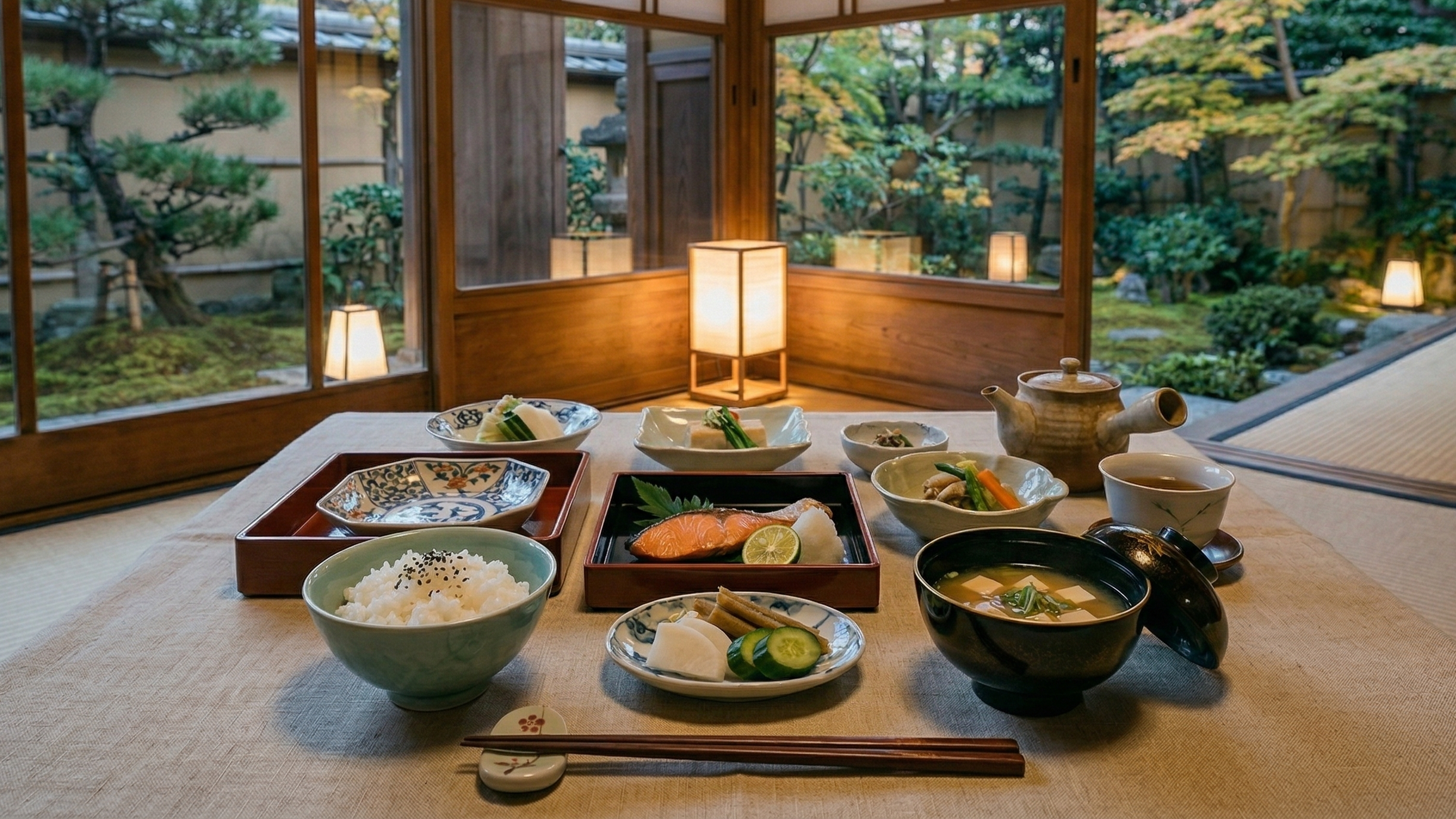
If you are planning your first meal in Japan, it is natural to feel a little nervous. You may wonder how to use chopsticks, whether slurping noodles is rude, how to eat sushi properly, or what to do when the bill arrives. The good news is that Japanese food etiquette is not there to scare visitors. It is simply a way of showing respect for the food, the people around you, and the atmosphere of the meal.
Once you understand a few basics, eating in Japan becomes much more enjoyable. Instead of worrying about making mistakes, you can relax and appreciate the experience. Japanese dining culture is less about being perfect and more about being thoughtful. That is why even a small amount of understanding can make your trip feel smoother, richer, and more memorable.
The basics are simpler than they look
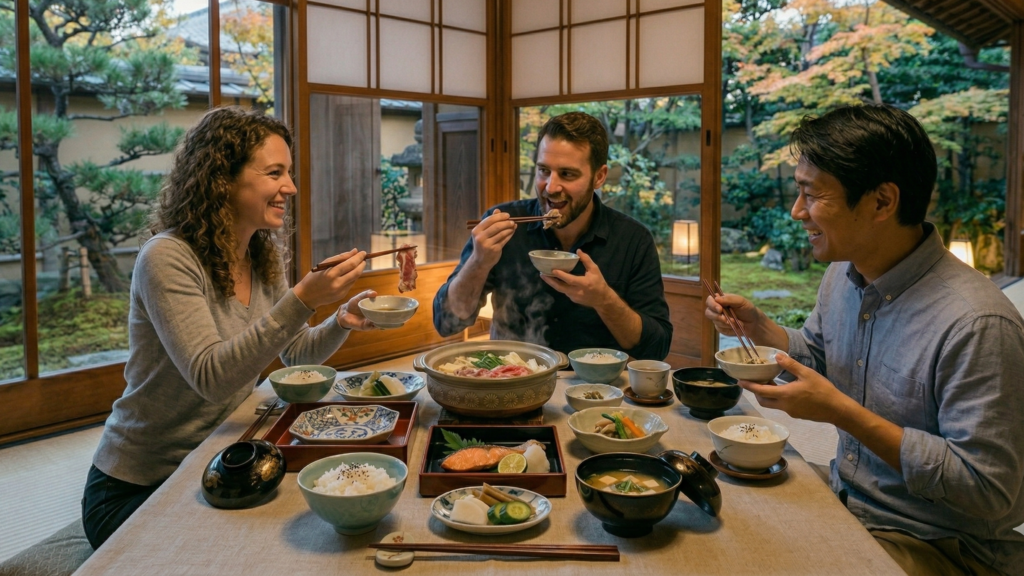
When eating with other people in Japan, it is polite to wait until everyone has received their food before starting. If you want to sound natural, you can say “itadakimasu” before the meal and “gochisousama deshita” after finishing. These phrases are not complicated formalities. They simply express appreciation for the meal.
You will also often receive a wet towel, called an oshibori, before eating. It is mainly for cleaning your hands. Using it calmly and neatly is enough. During the meal, the usual good manners apply: do not speak with your mouth full, do not chew loudly, and try to eat in a clean and respectful way.
In Japan, finishing your food neatly is generally appreciated. You do not need to force yourself if you are full, but making an effort to eat carefully and leave the table in a tidy way creates a good impression.
Chopsticks, noodles, and sushi are where most visitors feel nervous
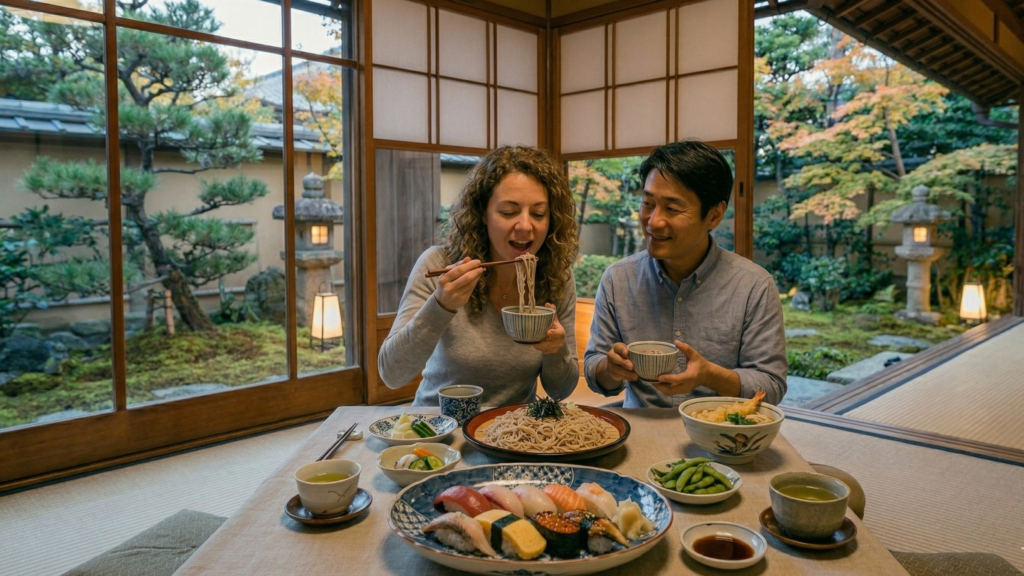
Chopsticks are often the biggest source of anxiety, but the key points are actually limited. First, do not stick chopsticks vertically into a bowl of rice. Also, avoid passing food directly from one pair of chopsticks to another. If you want to share food, placing it on a small plate first is a safe and natural option.
Small bowls, such as a rice bowl, can be lifted by hand and brought closer to your mouth while eating. Large plates, however, should usually stay on the table. If food is being shared, it is cleaner and more polite to take some onto your own plate before eating.
Noodles are one area where visitors can relax a little. In Japan, slurping soba, udon, or ramen is not considered rude. In many cases, it is a normal part of enjoying the meal. That said, you do not need to force yourself to do it dramatically. Just eat naturally and comfortably.
Sushi can feel intimidating, especially if you imagine strict rules, but most ordinary restaurants are not looking to judge visitors. Sushi can usually be eaten with either chopsticks or your hands, and it is better not to drown it in soy sauce. A light and respectful approach is more important than trying to look expert.
At shared meals, the atmosphere matters too
Japanese dining culture often values harmony at the table. If everyone is having drinks, it is common to wait until all glasses have arrived before making a toast. In social situations, people may also pour drinks for each other rather than only for themselves. You do not need to overthink this, but noticing these small patterns helps you feel more comfortable in the moment.
Shared dishes are similar. If there is one piece left, people often hesitate for a moment rather than taking it immediately. This is not a strict rule, but it reflects a common sense of consideration. In Japan, dining is not only about satisfying your own appetite. It is also about moving comfortably with the people around you.
The bill and restaurant behavior are easier than many travelers expect
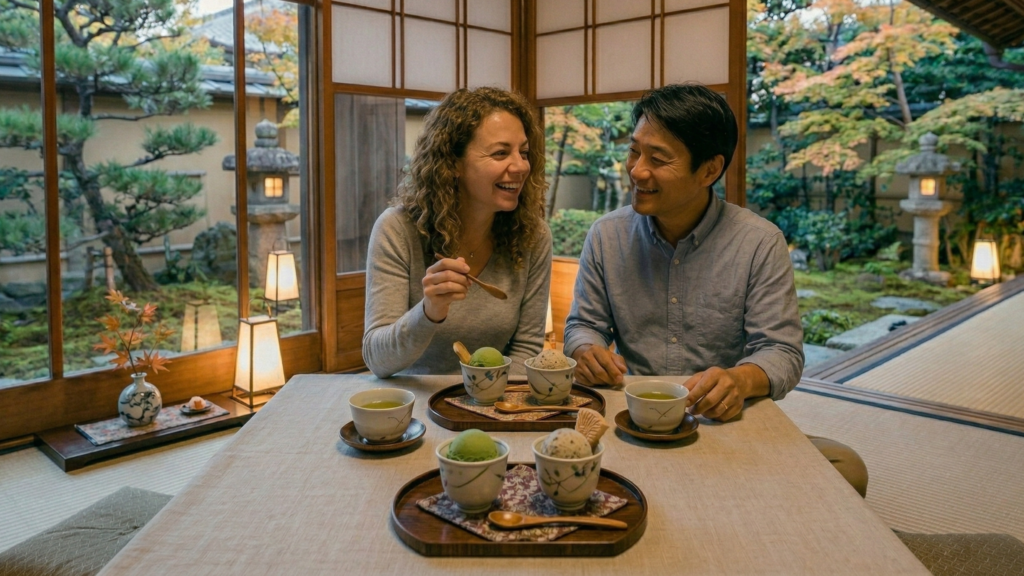
One of the easiest parts of dining in Japan is tipping: in most cases, you do not need to do it. Japan is generally a no-tipping country, so paying the bill normally is enough. For many travelers, this actually removes stress rather than adding it.
At the end of the meal, it is a nice touch to leave your dishes looking reasonably tidy. You do not need to arrange everything perfectly, but putting chopsticks back neatly and not leaving the table in complete disorder feels natural in Japan. This small sense of order matches the larger rhythm of Japanese dining culture.
Food etiquette in Japan is not a test
This may be the most important point of all. Japanese food etiquette is not designed to embarrass travelers. It is simply a reflection of care: care for the ingredients, care for the presentation, care for the people sharing the meal. If you approach the table with that spirit, you are already doing something right.
And once you know these basics, food in Japan becomes even more enjoyable. Sushi, noodles, ryokan breakfasts, small local restaurants, and quiet traditional meals all start to feel less intimidating and more inviting. So do not wait until you feel perfect. Learn a little, stay calm, and step into the experience. Very often, the meal you were most nervous about becomes one of the strongest memories of the whole trip.
